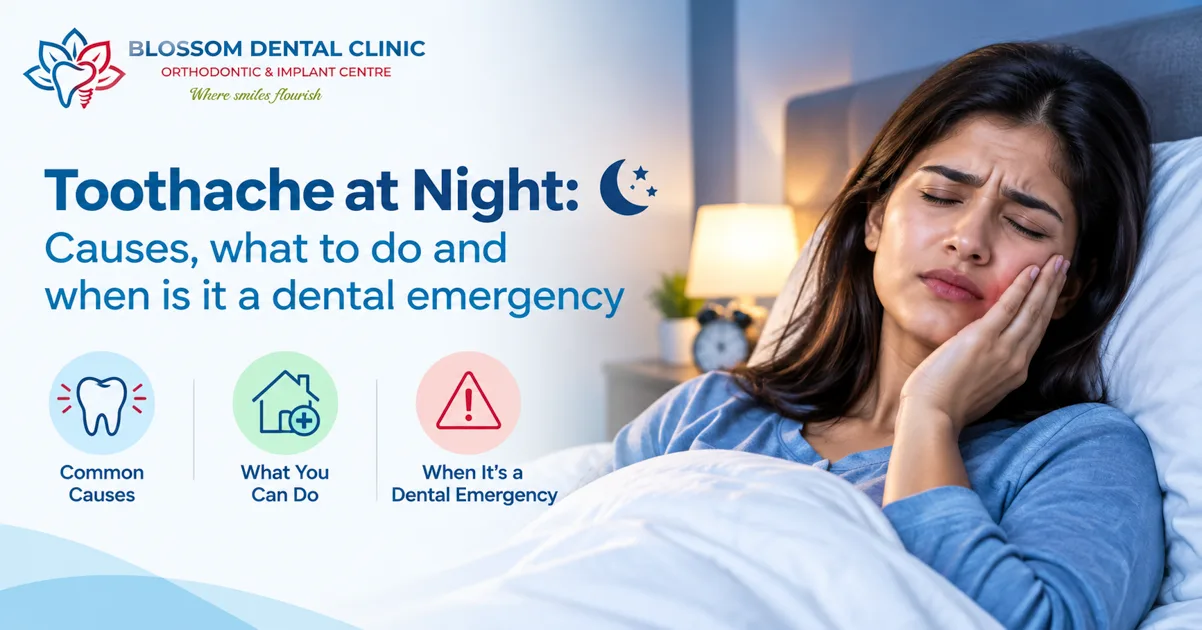
Have you ever gone to bed perfectly fine, only to wake up in the middle of the night with a throbbing toothache?
Tooth pain can be especially uncomfortable at night when there are fewer distractions and you are trying to sleep. While temporary measures may provide relief, recurring or severe toothache can be a sign of an underlying dental problem that needs professional attention.
At Blossom Dental Clinic – Orthodontic & Implant Centre, Bodakdev, Ahmedabad, we commonly see patients who have been managing tooth pain with painkillers until it becomes difficult to sleep, eat or carry on with their normal routine.
So, what causes toothache at night? What can you do until you see a dentist? And when does tooth pain become a dental emergency? Let's find out.
Why does Toothache get worse at night?
There isn't always one single reason why tooth pain feels worse at night. Several dental conditions can cause night time pain, and lying down may make an existing problem feel more noticeable.
1. Tooth Decay
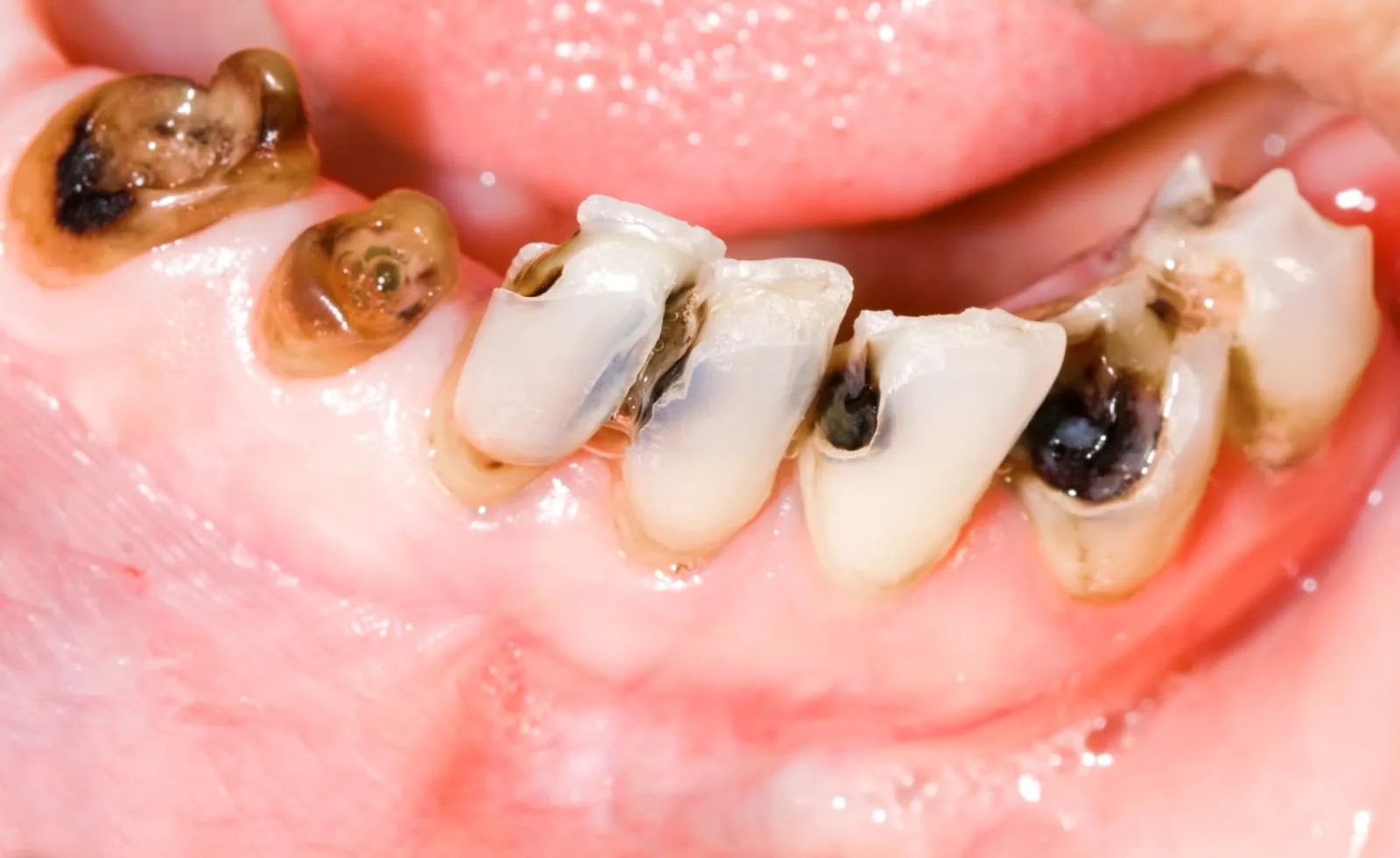
A small cavity may initially cause sensitivity to cold, hot or sweet foods. However, as tooth decay progresses deeper into the tooth, it can affect the dental pulp—the innermost part of the tooth containing nerves and blood vessels. This can result in spontaneous, persistent or throbbing tooth pain.
If you are experiencing repeated toothache, don't wait until the pain becomes severe. Early diagnosis can sometimes allow a simpler treatment.
2. Inflammation or Infection of the Dental Pulp
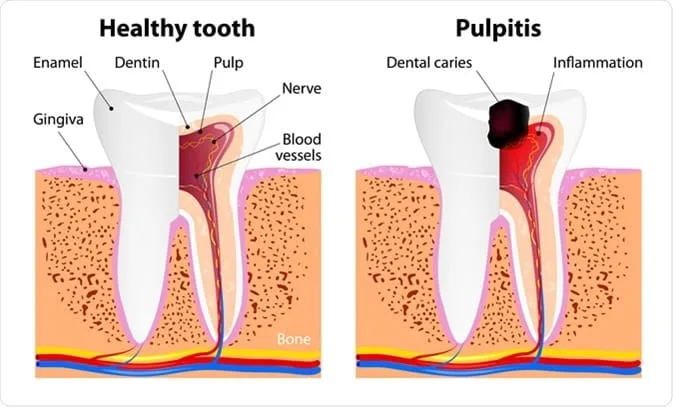
When decay, trauma or another dental problem reaches the pulp, inflammation can develop.
You may experience:
- Throbbing tooth pain
- Pain without an obvious trigger
- Sensitivity to hot or cold
- Pain that continues after the trigger is removed
- Pain that wakes you from sleep
Depending on the diagnosis and extent of damage, treatment may include a filling, pulp therapy or root canal treatment.
At Blossom Dental Clinic, Ahmedabad we evaluate the tooth clinically and use appropriate diagnostic tests and dental X-rays when required to determine the source of the pain.
3. Dental Abscess
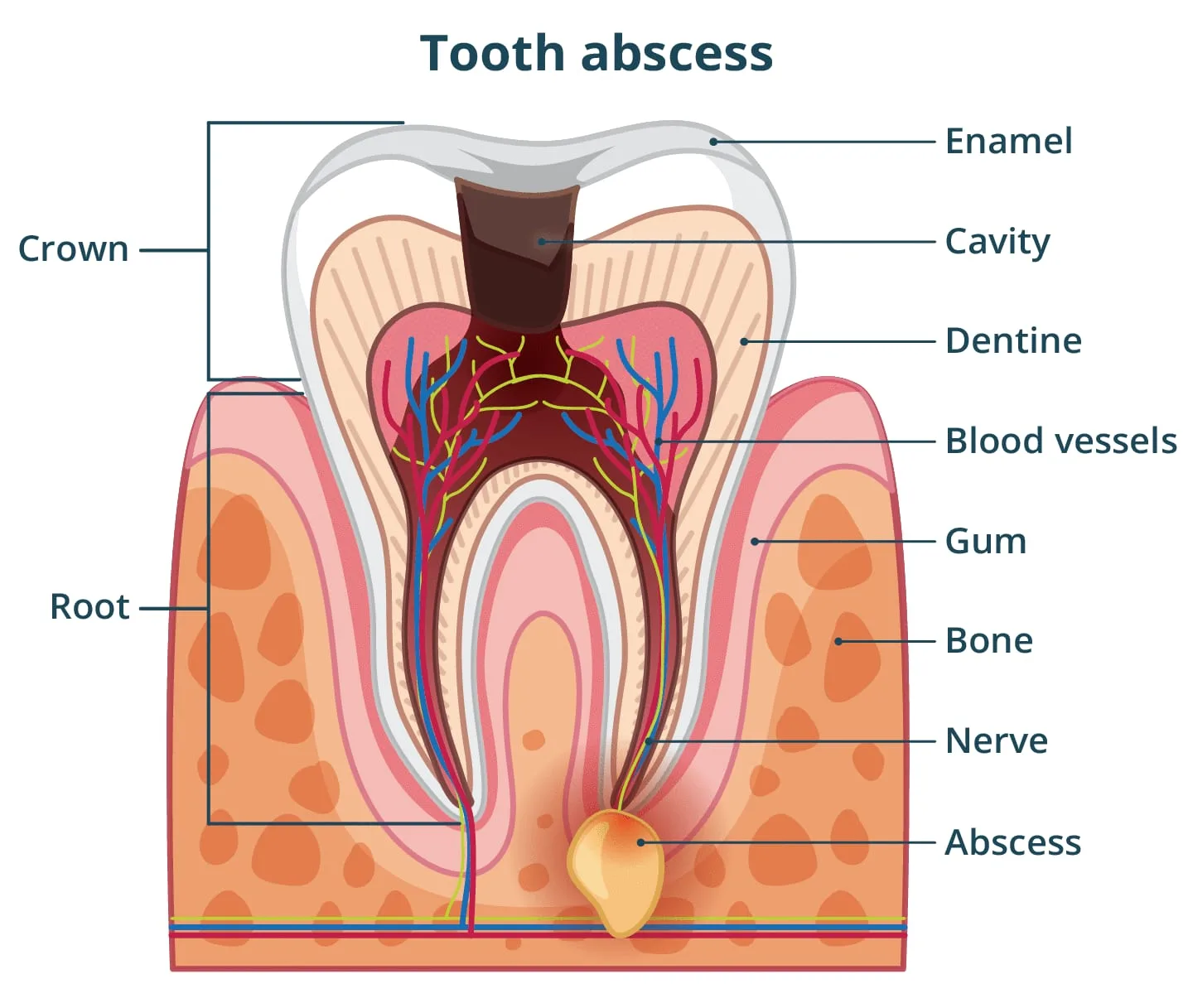
A dental abscess occurs when pus builds up because of a bacterial infection. It may cause intense toothache, swelling of the face or jaw, bad taste, difficulty chewing and sometimes fever. A dental abscess requires professional treatment and should not simply be left untreated. If your toothache is accompanied by facial swelling or fever, arrange an urgent dental assessment.
4. Cracked or Fractured Tooth
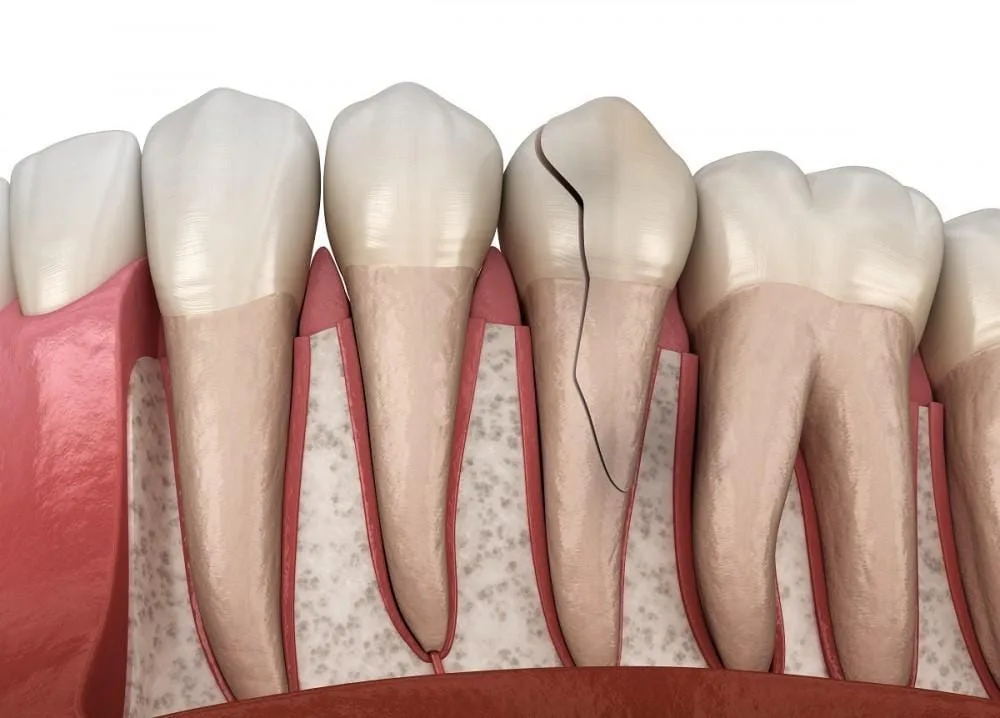
A cracked tooth can cause sharp or intermittent pain, particularly while biting or chewing. Some cracks can be difficult to identify without a detailed dental examination. Treatment depends on the location and extent of the crack and may include a restoration, root canal treatment or, in severely damaged teeth, extraction.
5. Gum Disease
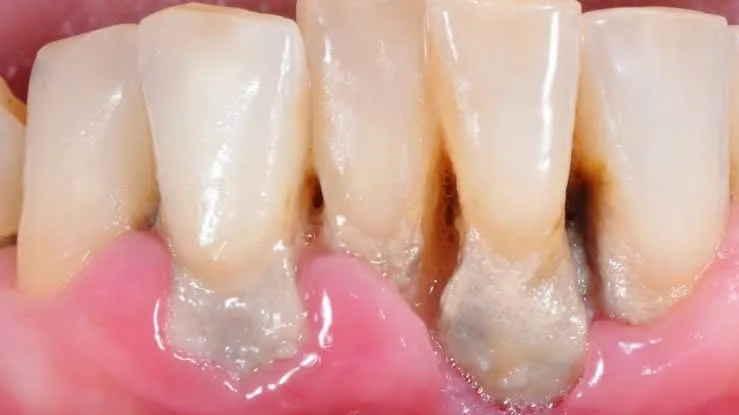
Tooth pain isn't always caused by the tooth itself. Inflamed or infected gums can cause tenderness and discomfort.
Gum disease may also be associated with:
- Bleeding gums
- Swelling
- Bad breath
- Gum recession
- Tooth mobility
- Discomfort while chewing
Regular dental examinations can help identify gum problems before they become more advanced.
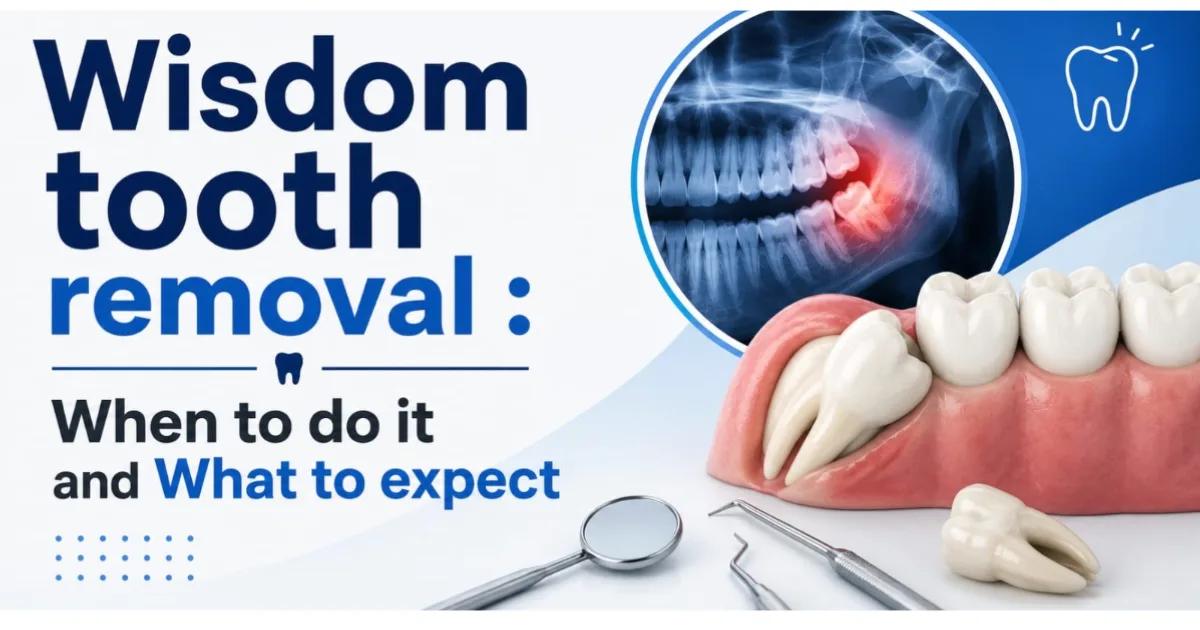
6. Wisdom Tooth Problems
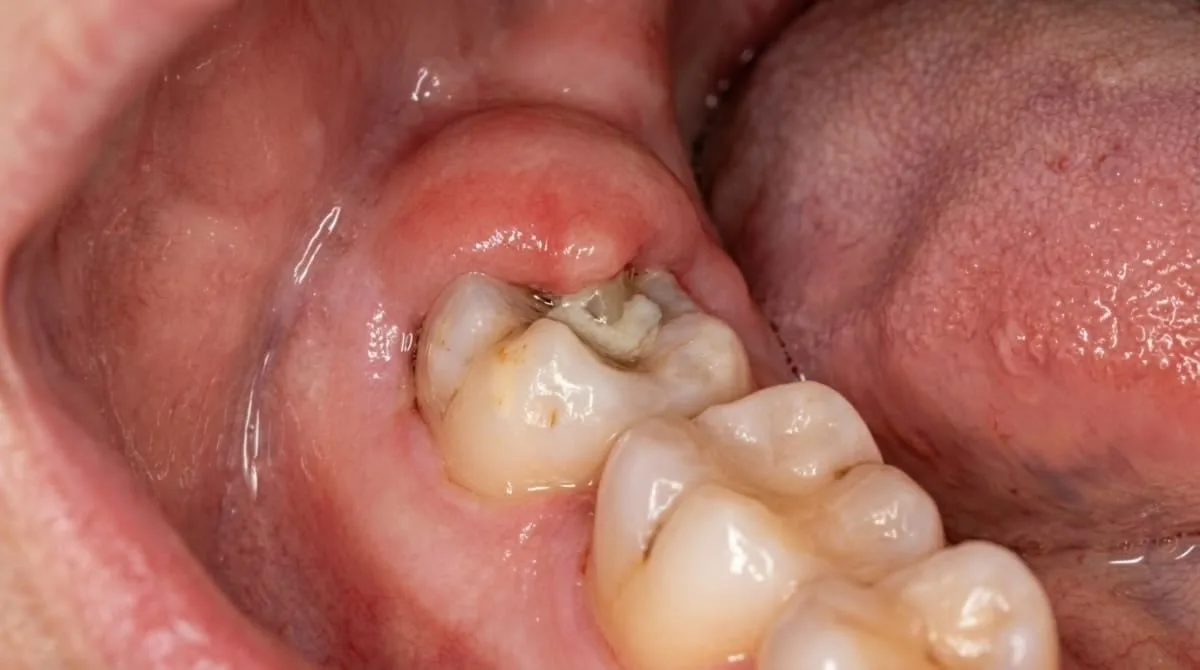
Wisdom teeth can sometimes cause pain when they are partially erupted, impacted or difficult to clean.
Symptoms can include:
- Pain at the back of the jaw
- Swollen gum around the wisdom tooth
- Difficulty opening the mouth
- Pain while chewing
- Bad taste or unpleasant smell
A clinical examination and dental X-ray may be recommended to determine the position of the wisdom tooth and the appropriate treatment.
7. Teeth Grinding or Clenching
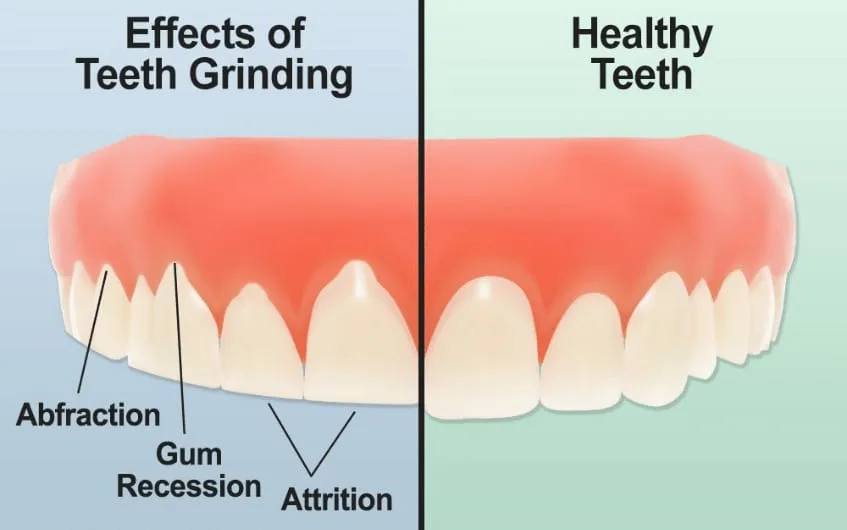
Do you wake up with jaw soreness or headaches along with tooth sensitivity?
Nighttime teeth grinding or clenching can put excessive pressure on the teeth and jaw muscles. It may contribute to: Tooth sensitivity, Worn teeth, Cracked teeth, Jaw discomfort and Morning headaches.
A dentist can assess whether bruxism may be contributing to your symptoms.
What can you do for Toothache at night?
If you develop toothache at night and cannot immediately visit your dentist, some temporary measures may help until you can receive professional care.
- Keep Your Head Slightly Elevated
- If your pain feels worse when lying completely flat, try sleeping with your head slightly elevated.
- Avoid Very Hot, Cold and Sugary Foods
- Choose softer foods and avoid chewing on the painful side, these can trigger sensitivity and make tooth pain worse.
Rinse With Warm Salt Water
A gentle warm salt-water rinse may help keep the mouth clean and provide temporary soothing relief.
Use Appropriate Pain Relief
For many adults and adolescents, non-opioid pain medicines such as NSAIDs, including ibuprofen, alone or in combination with acetaminophen/paracetamol, can be effective for temporary management of acute dental pain when dental treatment is not immediately available.
However, painkillers are only a temporary measure. They do not remove the underlying cause of toothache.
If you have medical conditions, taking other medicines, are pregnant, or are unsure whether a particular medication is safe for you, consult a healthcare professional .
Don't Put Aspirin Directly on the Tooth
Do not place aspirin or other tablets directly against your tooth or gums. This can irritate or damage the soft tissues.
When is Toothache a Dental Emergency?
Not every toothache requires hospital emergency care, but some symptoms require urgent dental attention.
You should arrange prompt dental assessment if you have:
- Severe or persistent tooth pain
- Toothache that is disturbing your sleep
- Pain that is not improving with appropriate pain relief
- Facial or jaw swelling
- Fever associated with tooth pain
- Pus or a persistent bad taste
- Difficulty opening your mouth
- A severely broken or damaged tooth
- A knocked-out tooth or significant dental trauma
- Severe dental pain, swelling and dental trauma can require urgent assessment and treatment.
When should you go to a hospital immediately?
Some dental infections can spread into the surrounding tissues and become serious.
Seek emergency medical care immediately if dental swelling is associated with difficulty breathing, swallowing or speaking.
Severe swelling involving the mouth, throat or neck can potentially compromise the airway and should not be managed by simply waiting for a routine dental appointment.
Can Toothache go away on its own?
Sometimes tooth pain may temporarily disappear—but that doesn't necessarily mean the problem has been cured.
For example, pain associated with an inflamed or infected tooth may change over time. Similarly, an abscess can occasionally drain and temporarily reduce pressure and pain while the underlying infection remains.
So, if you think:
“My tooth stopped hurting, so I don't need a dentist.”
Think again.
No pain does not mean no problem
Does Toothache Always Mean You Need a Root Canal?
No.
A toothache does not automatically mean that you need a root canal. The treatment depends on the cause and extent of the problem. Depending on the diagnosis, treatment may include: Dental filling, Professional cleaning or gum treatment, Treatment of a cracked tooth, Root canal treatment, Drainage of an abscess, Wisdom tooth treatment or Extraction when a tooth cannot be predictably restored.
At Blossom Dental Clinic – Orthodontic & Implant Centre, treatment is recommended after assessing the individual tooth and the underlying cause of the pain rather than treating every toothache in the same way.
How Can You Prevent Toothache at Night?
The best dental emergency is often the one you prevent.
- Brush Twice a Day
- Brush twice daily with fluoride toothpaste.
- Clean Between Your Teeth
- Use floss or an appropriate interdental cleaning method to remove plaque from areas your toothbrush cannot reach.
- Don't Ignore Sensitivity or Occasional Toothache
- Limit Frequent Sugary Snacks and Drinks
- Schedule Regular Dental Check-Ups
A tooth that hurts occasionally can still have an underlying problem. Early dental assessment may prevent the condition from progressing. Regular examinations allow your dentist to identify cavities, gum disease, cracked teeth and other problems before they become painful.
Don't Ignore the Warning Signs
A toothache is often your body's way of telling you that something needs attention. If your tooth pain is persistent, recurrent or severe—or if it is accompanied by swelling, fever, bad taste, difficulty opening your mouth or other concerning symptoms—don't rely on painkillers alone.
At Blossom Dental Clinic – Orthodontic & Implant Centre, Bodakdev, Ahmedabad, our experts provide comprehensive dental care to help diagnose the cause of dental pain and recommend appropriate treatment.
Whether your toothache is caused by a cavity, dental infection, cracked tooth, gum problem, wisdom tooth or another dental condition, getting the cause identified early can help prevent the problem from becoming more complicated.